
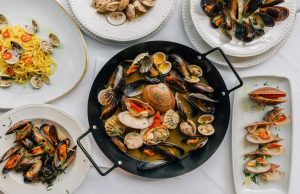
 With the exclusive farming of Mediterranean mussels and accounting for 67% of total shellfish aquaculture, the region of Central Macedonia places Greece 6th in the EU-27 in terms of the production volume of aquaculture mollusks and 8th in terms of production value.
Mussels are shellfish rich in many essential nutrients for the body. Externally, the mussel is black or dark blue, while its interior has a glossy black appearance with vibrant blue areas. Mussels contain high-biological-value proteins that include all essential amino acids.
Their fat content is low, but they contain particularly high levels of fatty acids such as eicosapentaenoic acid (EPA) and docosahexaenoic acid (DHA), which have many beneficial effects, including supporting brain function. Additionally, mussels are rich in vitamins, specifically vitamins A, B1, B2, and E.
Cockles and clams are, after mussels, the most common shellfish found in Greek seas.The ribbed cockle (Venus verrucosa) and the shiny pink-salmon clam (Callista chione) are similar in terms of their culinary use. They are fished in specific locations throughout the country and prefer sandy seabeds.
Both cockles and clams have exceptionally tasty, sweet, and crunchy flesh full of the flavor of the sea. Cockles and clams are a rich source of animal protein and have a very high iron content. They are low in saturated fats and are a very good source of omega-3 fatty acids.