
The crocus flower, from which saffron is derived,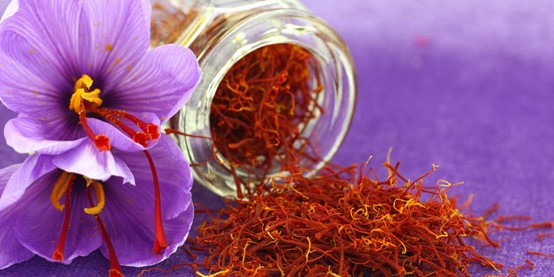 was already being harvested during the Minoan period (2600-1100 BC). Furthermore, references to the crocus flower and its stigmas appear in early literary texts such as the works of Homer, the Old Testament, and in Greek mythology.
Today, Greek saffron comes exclusively from the region of Kozani. Its cultivation in this area dates back to the 17th century, as the unique soil and climate conditions (well-drained, moderately fertile soil, and a warm temperate climate), combined with specialized knowledge of cultivation and harvesting, result in a product of exceptional quality. The crocus flowers begin to appear in mid-October and bloom for 20 to 25 days. During harvesting, the flowers are carefully handpicked from sunrise to sunset. They
are then gathered at a special worktable where the stamens and stigmas are
separated from the rest of the flower using an electric fan. The most critical and
challenging stage is the drying process, which requires particular attention and skill.
The fresh stigmas are laid out in thin layers on sieves with a silk base. They are then
moved to well-ventilated, heated rooms. All these processes are carried out entirely
by hand and take between 20 and 60 days.
Since 1999, Kozani saffron has been registered as a Protected Designation of Origin
(PDO) product, and in recent years, it has been the subject of intensive research at
numerous university laboratories in Greece and abroad.
Kozani saffron is considered a powerful aid in strengthening the body’s immune
defense, as it possesses strong antioxidant, anti-inflammatory, antithrombotic, and
vasodilatory properties.
Its key active components are picrocrocin, safranal, crocin, lycopene, zeaxanthin,
vitamins B and B2, α-, β-, and γ-carotene, carbohydrates, and essential oil. These are
believed to be responsible for many of the beneficial properties attributed to Kozani
saffron.