
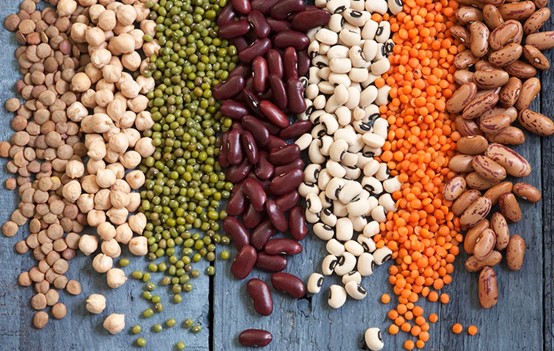
 Two unique local legume varieties thrive in the fertile soils of Lemnos: afkos (Lathyrus ochrus) and lafiri (Lathyrus sativus), whose taste and properties make them stand out. These local varieties are classified as dry-farmed crops and, along with white-eyed beans (aspromitika) (Vigna unguiculata), they represent the most widespread legume crops cultivations in Lemnos during the 20th and 21st centuries.
• Afkos is a traditional variety of grass pea, from which the renowned fava of Lemnos is made. It has a particularly velvety texture and a distinct sweet flavor, distinguishing it from other varieties. It is mainly sown in autumn and harvested in the early weeks of June. It is especially rich in plant-based proteins, carbohydrates, and dietary fiber, making it a food of high nutritional value, while being low in fat, cholesterol, and calories.
• The white-eyed bean resembles the well-known black-eyed bean, but it is drought-resistant, smaller in size, and has a brown spot instead of black. During the 1960s and 1970s, Lemnos produced large quantities of this variety, with significatn exports throughout Greece.
Its cultivation presents several challenges, especially during the cleaning and separation of the beans from foreign matter, which is largely done manually except for the initial sowing stage. Despite this, it has seen a revival over the past decade in central and eastern Lemnos, thanks to the dedication and passion of local farmers.
• The chickpea of Lemnos is small to medium in size and is distinguished by its buttery texture and full flavor. It is used in traditional dishes such as wood-fired chickpeas and “revithada.”
• The lentil of Lemnos has a distinctively thin skin, which makes it more easily digestible and quicker to cook. Its flavor is earthy and mild, while it is rich in protein and fiber.
Lemnos legumes are exceptionally rich in protein, dietary fiber, vitamins, and minerals, making them a key component of a healthy and balanced diet.