
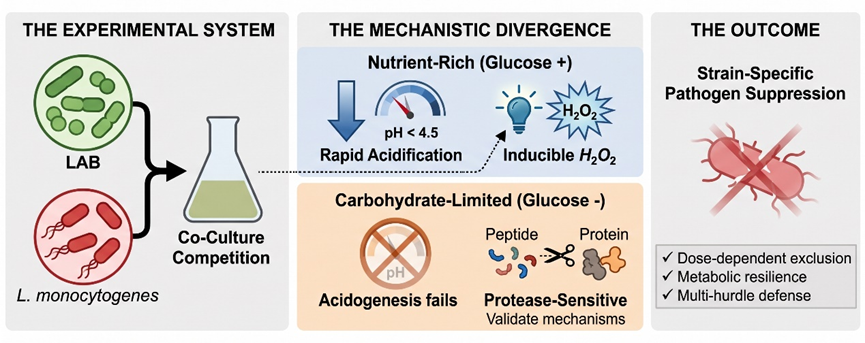
A significant research study highlighting the effectiveness of lactic acid bacteria as natural bioprotective agents against the foodborne pathogen Listeria monocytogenes has recently been published. The study investigates the dynamics of their competitive activity and the underlying mechanisms of pathogen suppression under different nutrient availability conditions.
The research systematically examined nine strains of lactic acid bacteria belonging to the species Lactiplantibacillus plantarum, Lactiplantibacillus pentosus, and Lactococcus lactis subsp. lactis. By combining co-culture kinetic studies with targeted chemical and enzymatic treatments, the study distinguishes the contributions of organic acids, oxidative stress, and proteinaceous compounds to pathogen inhibition.
The findings revealed significant differences in the bioprotective effectiveness of the bacterial strains:
- Pathogen inhibition is strongly dose-dependent and strain-specific.
- The most effective strains achieved 31–41% pathogen suppression, inducing a rapid decrease in pH within the first six hours. This indicates that effectiveness is directly associated with the onset of acidification rather than simply the bacterial growth rate.
- Under glucose-depleted conditions, the inhibitory capacity of most strains decreased to below 6%. However, the Lactococcus lactis strains BL1 and BL8 demonstrated exceptional metabolic resilience, maintaining approximately 16% inhibitory activity.
- The protective activity of lactic acid bacteria relies on a hierarchy of mechanisms, with organic acid production serving as the primary line of defense in nutrient-rich environments.
- An inducible, catalase-sensitive activity was also identified, emerging predominantly during co-cultivation with the pathogen. In addition, a constitutive, protease-sensitive defense mechanism remained active across all strains, regardless of carbohydrate availability.
These findings provide valuable insights for the development of targeted and reliable biopreservation strategies in food systems. They highlight the importance of selecting bioprotective cultures based on their capacity for rapid acidification, combined with the presence of acid-independent antimicrobial mechanisms, rather than focusing exclusively on their ability to acidify the surrounding environment.
The study was conducted through a collaboration among researchers from the Institute of Applied Biosciences (INAB) of the Centre for Research and Technology Hellas (CERTH), the University of the Aegean, and Aristotle University of Thessaloniki.
The research was funded by the General Secretariat for Research and Innovation, under the initiative “Flagship Action for Sustainable Agri-Food Systems – Applied Research, Infrastructure Development and Services for the Sustainability of the Sector.”
The study was published in the international scientific journal Microorganisms, published by MDPI.
Publication title: “Strain-Specific Antimicrobial Mechanisms of Lactic Acid Bacteria Against Listeria monocytogenes Scott A Under Nutrient-Rich and Carbohydrate-Limited Conditions”