
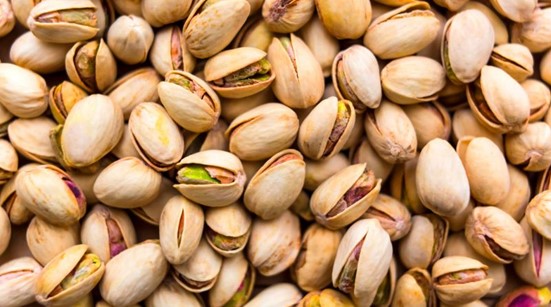
 The pistachio tree (Pistacia vera L.) is a deciduous fruit-bearing tree belonging to the Anacardiaceae family, originating from the wider region of Central Asia and the Middle East. It is cultivated in many countries around the world, as its nuts are valued for their distinctive flavour and high nutritional value. In Greece, pistachio cultivation has particular historical and economic significance, with Aegina being one of the country’s most recognized production areas.
The systematic cultivation of pistachios on the island of Aegina began towards the end of the 19th century. According to historical accounts, in 1896, Nikolaos Peroglou planted the first pistachio seeds on the island, contributing to the development of local cultivation. Aegina Pistachio was recognised by the European Union as a Protected Designation of Origin (PDO) product in 1996, officially protecting its name and its connection to the specific geographical area. Its distinctive quality is attributed to the combination of Aegina’s soil and climatic conditions and the characteristics of local production practices, which contribute to its characteristic aroma and flavour.
The pistachio tree is a long-lived species, adapted to areas with relatively cold winters and hot, dry summers. It can grow in different soil types, provided that adequate drainage is ensured. Fruit production generally begins several years after planting, while full productive capacity is reached gradually, depending on the variety, cultivation practices and environmental conditions. The fruit develops within an outer covering, which is removed during post-harvest processing, leaving the characteristic hard shell that surrounds the edible kernel.
From a nutritional perspective, pistachios are a nutrient-dense food and an important source of plant-based protein, dietary fibre and fatty acids, mainly monounsaturated and polyunsaturated fats. They also contain phytosterols, tocopherols, carotenoids and polyphenolic compounds, including flavonoids and anthocyanins, which contribute to their overall antioxidant activity. In addition, pistachios provide important minerals such as potassium, magnesium, phosphorus, calcium, iron and zinc, as well as vitamins, particularly B-group vitamins, including thiamine (B1) and vitamin B6, and vitamin E. Their high content of unsaturated fatty acids, together with dietary fibre and protein, makes pistachios a nutritious food that can be incorporated into a balanced dietary pattern. However, due to their relatively high energy density, portion size should be taken into consideration, as a 30 g serving provides approximately 160–170 kcal, depending on the product’s composition and processing.
The long-standing cultivation tradition, the close relationship between the product and Aegina’s natural environment, and the preservation of its local production identity make Aegina Pistachio PDO one of the most distinctive products of Greece’s agri-food heritage.
Mandalari, G., Barreca, D., Gervasi, T., Roussell, M. A., Klein, B., Feeney, M. J., & Carughi, A. (2022). Pistachio Nuts (Pistacia vera L.): Production, Nutrients, Bioactives and Novel Health Effects. Plants, 11(1), 18. https://doi.org/10.3390/plants11010018
Commission Regulation (EC) No 1263/96 of 1 July 1996 Supplementing the Annex to Regulation (EC) No 1107/96 on the Registration of Geographical Indications and Designations of Origin under the Procedure Laid down in Article 17 of Regulation (EEC) No 2081/92, 163 OJ L (1996). http://data.europa.eu/eli/reg/1996/1263/oj