
Until the 1960s, the Greek Black Pig was raised in rural areas,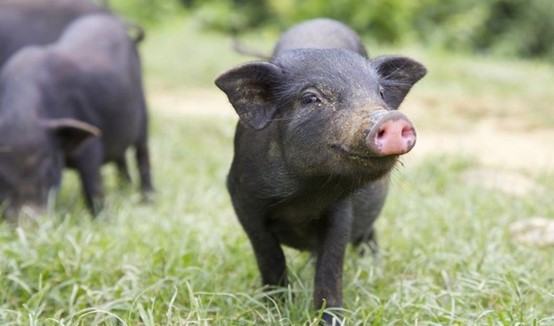 serving the needs of traditional household farming economies. In recent years, there has been a revival of interest in this breed, with efforts to highlight the quality and unique flavor of its meat.
One of the breed’s key traits is its resilience to weather conditions and its resistance to disease. The rearing of the black pig is semi-extensive, and the animals are born and raised in their natural environment for most of their lives, feeding on wild vegetation such as acorns, oak, beech, chestnuts, fern tubers, grass, and other natural vegetation. The animals are monitored but roam freely, maintaining their well-being and welfare. They have a longer lifespan and reach a lower body weight compared to conventional breeds.
The meat of the black pig has significant nutritional value, particularly in terms of its fat content. Visually, the meat is redder and fattier, though with less intramuscular fat, and is juicier than typical pork. It is also rich in iron, proteins, trace elements, and minerals that are essential or important for the human body. The unique fat composition of the black pig is a defining feature: it contains up to 50% monounsaturated fats, as well as polyunsaturated alpha-linolenic acid, and elevated levels of omega-3 and omega-6 fatty acids.
The Greek Black Pig highlights the richness of Greek nature, the importance of preserving and showcasing traditional breeds, and the continuation of cultural heritage through gastronomy.